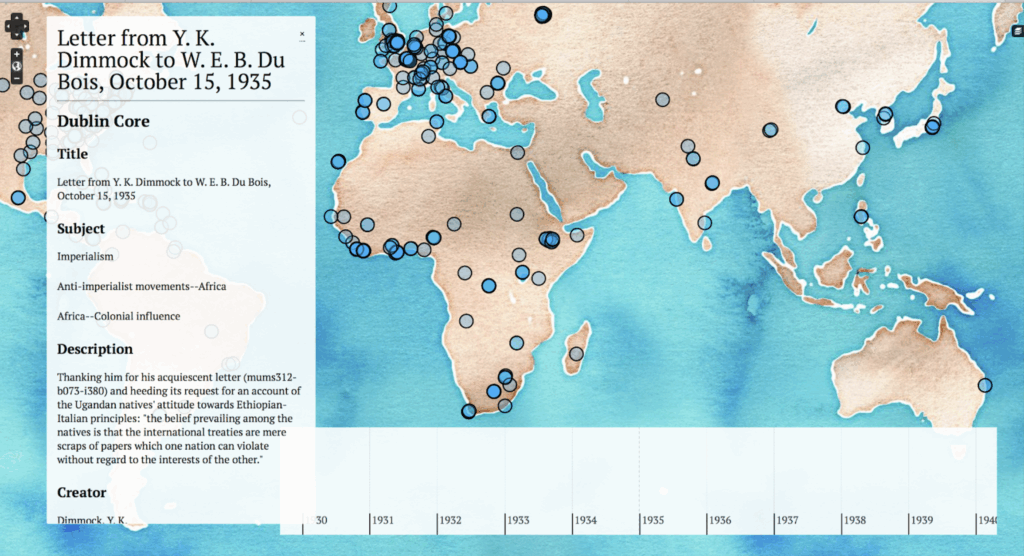
Risam prototyped a map based on the correspondence dataset using Neatline.
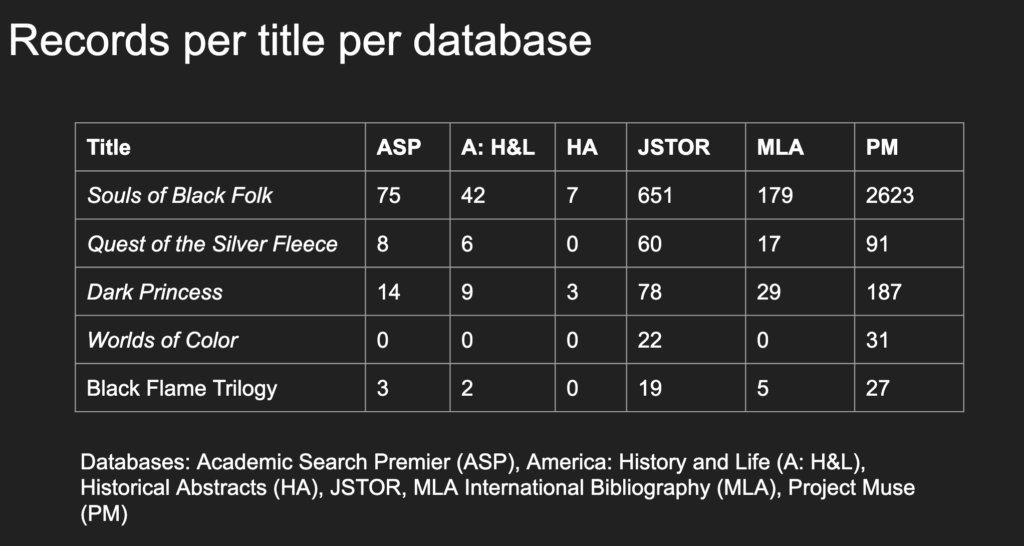
Risam started experimenting with bibliometrics to examine the reception of Du Bois’s literary writing. She scraped citation data from scholarly databases to trace how the global dimensions of his work have been suppressed or revived in academic research since publication.
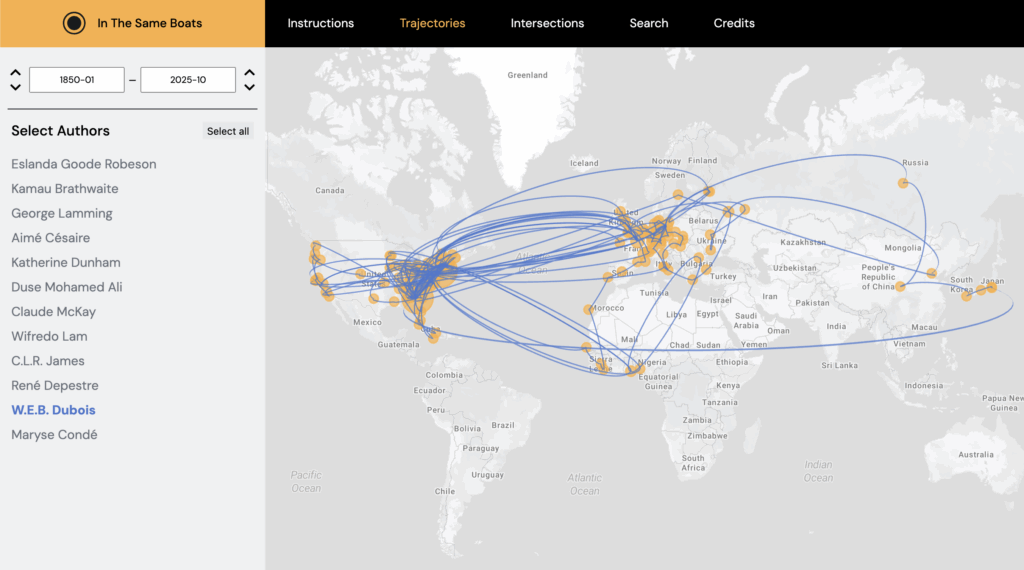
Risam's first dataset of Du Bois's travels is used for In the Same Boats, directed by Kaiama Glover and Alex Gil, alongside curated datasets of other Black intellectuals, allowing researchers to identify potential connections in the Afro-Atlantic world.
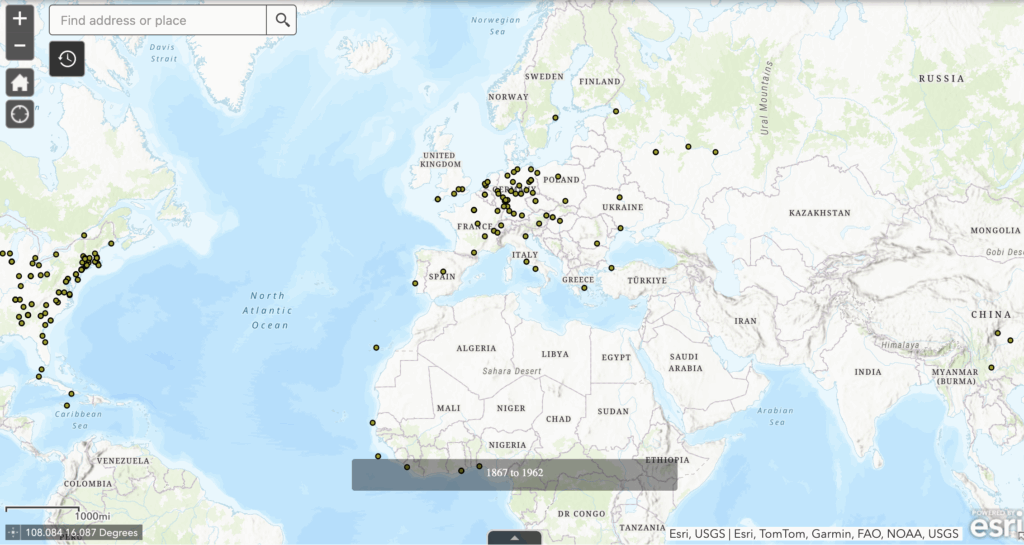
With support from Stephen Gaughan, GIS Manager at Dartmouth, Risam developed an ArcGIS map visualizing locations from the expanded dataset of Du Bois’s journeys, creating an interactive spatiotemporal tool for understanding his global connections.
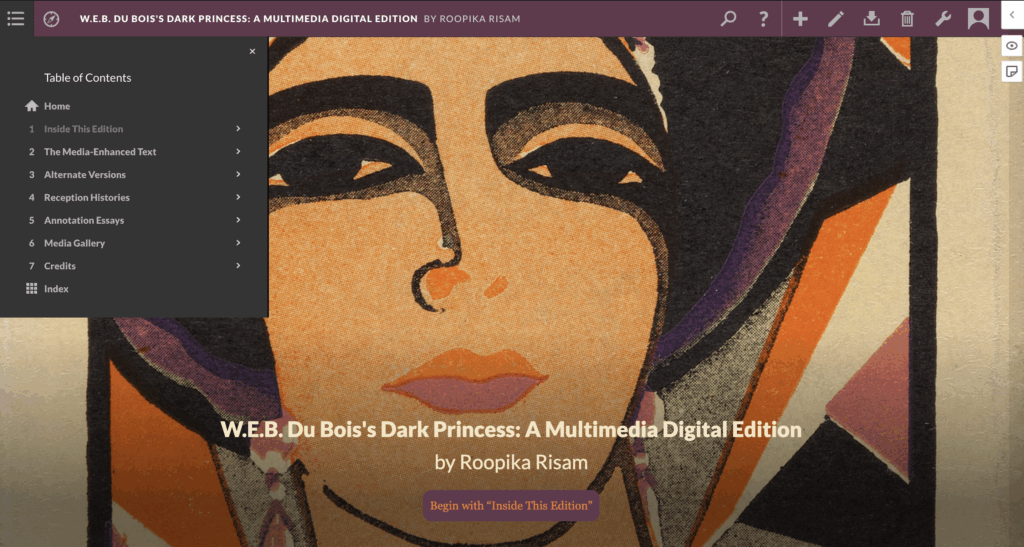
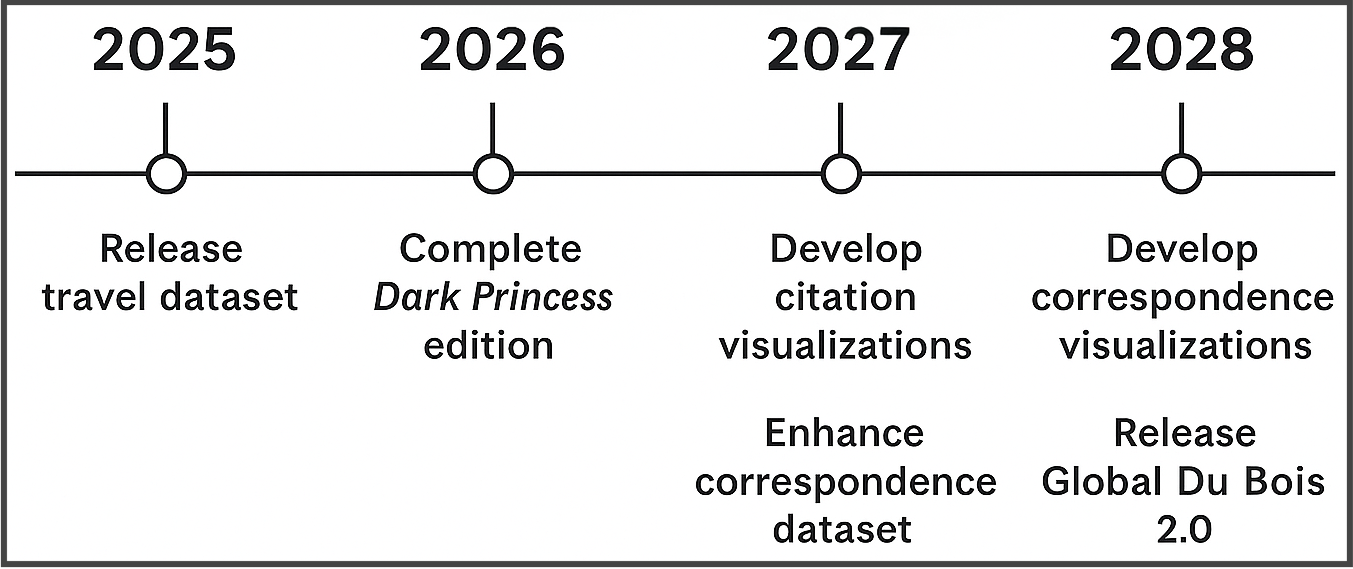
Risam began working on a media-enhanced digital edition of Dark Princess (1928), which entered the public domain in 2024. Dartmouth students identified allusions and historical contexts in need of annotations for readers.
The project debuts to the public, offering an interactive map and contextual materials tracing Du Bois's global journeys.