
“Let the nations of the world respect the integrity and independence of the free
Negro states of Abyssinia, Liberia, Haiti, and the rest, and let the inhabitants
of these states, the independent tribes of Africa, the Negroes of the West Indies
and America, and the black subjects of all nations take courage, strive
ceaselessly, and fight bravely, that they may prove to the world their
incontestable right to be counted among the great brotherhood of mankind.”
-W.E.B. Du Bois, “To the Nations of the World,” 19001
The “Two Du Boises”
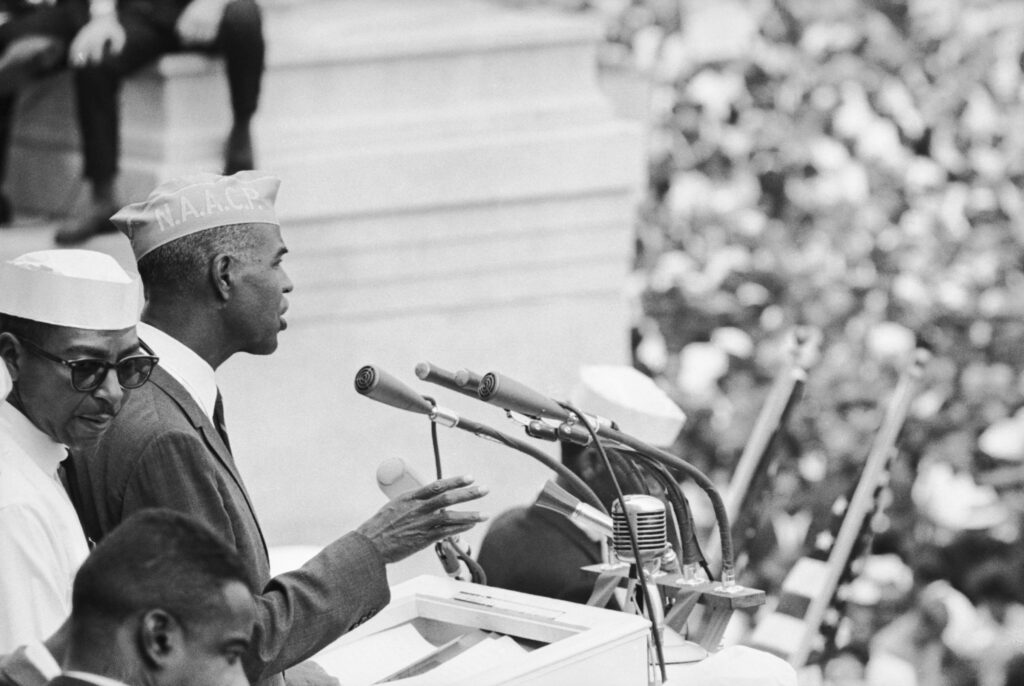
As a crowd of 250,000 gathered on the National Mall for the March on Washington on August 28, 1963, eagerly awaiting Martin Luther King, Jr.’s speech, Roy Wilkins, executive secretary of the NAACP, announced that W.E.B. Du Bois had died in Ghana the night before. Briefly eulogizing Du Bois for the crowd, Wilkins said, “Regardless of the fact that in his later years, Dr. Du Bois chose another path, it is incontrovertible that at the dawn of the 20th century, his was the voice calling you to gather here today in this cause.”2
Wilkins’s remarks anticipate a trend in Du Bois scholarship that charts two different paths of his life. In this narrative, the Du Bois of the early years appears the consummate race man. His work on African Americans (The Philadelphia Negro, The Souls of Black Folk, Black Reconstruction in America) and his activism (the Niagara Movement, the NAACP, The Crisis) firmly credential him as a scholar-activist dedicated to the problem of the color line in the U.S.

The other Du Bois was a version at once embarrassing and dangerous to the African American political establishment amid growing fears of communism in the U.S. He began embracing Black separatism, resigned from the NAACP and The Crisis by 1934, then returned to the NAACP in 1944 only to be dismissed four years later for ideological disagreements — namely his growing interest in socialism and communism, his leftist stance on global politics, and his emphatic support for decolonization movements worldwide.3 Facing increased scrutiny and surveillance by the U.S. government for his work as chairman of the Peace Information Center, which the U.S. believed was acting as an agent of the Soviet Union, Du Bois eventually expatriated to Ghana, where he died in effective exile on the night before the March on Washington.
Thus, the general trend in Du Bois scholarship, particularly in the work of Arnold Rampersad, David Levering Lewis, and Henry Louis Gates, perpetuates the false dichotomy between a younger Du Bois committed to African American freedom struggles and an older Du Bois whose global commitments signify a rejection of his domestic ones.4
The tendency to identify this particular trajectory for Du Bois’s work is troubling. In fact, Du Bois’s international vision originates at the beginning of his scholarship, with The Suppression of the African Slave Trade (1896). As early as 1900, we find Du Bois in London leading conversations at the First Pan-African Conference, which brought together intellectuals, activists, and political leaders from Africa, the Caribbean, Europe, and the United States to articulate a shared vision of racial equality and anticolonial solidarity. It continues in The Souls of Black Folk (1903), where Du Bois wrote, “The problem of the twentieth century is the problem of the color-line.” The rest of that sentence, too often left out in citation — “the relation of the darker to the lighter races of men in Asia and Africa, in America and the islands of the sea” — makes plain that his concept of race was always global in scope.5 In 1906, Du Bois insisted that, “The color line belts the world.”6 Later, in The Gift of Black Folk (1924), Du Bois theorizes the relationship between enslaved African labor and the rise of modernity. These are but a few examples of many that complicate narratives that position Du Bois’s early writings as national in orientation while neatly confining Du Bois’s international outlook to his waning years.
Visions of Solidarity
Two of Du Bois’s novels take up the relationship between struggles of African Americans and those of oppressed people of color around the world: Dark Princess (1928) and Worlds of Color (1961). Discussing Du Bois’s literary writing is always a fraught proposition because the general consensus — from Du Bois’s contemporaries, current scholars, and even my own students — is that fiction is not one of Du Bois’s strengths. Aesthetics aside, these two novels offer insight on the intricacies of Du Bois’s global visions.
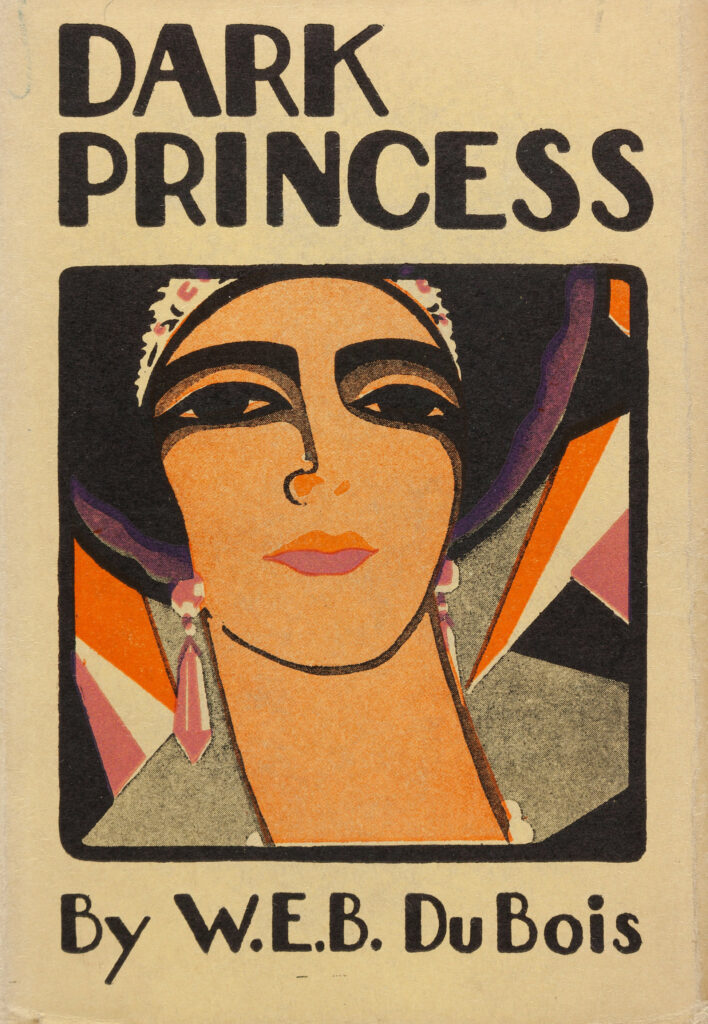
Dark Princess tells the story of Matthew Towns, an African American medical student who exiles himself to Berlin, where he meets the mysterious and beautiful Princess Kautilya of the fictional Indian state of Bwodpur. As a member of the Council of Darker Races, an Afro-Asian solidarity movement committed to anticolonialism and communism, Princess Kautilya recruits the lovestruck Matthew for her cause. Matthew returns to the U.S., where he works as Pullman Porter, serves prison time for a botched bombing plot against the Ku Klux Klan, becomes a Chicago politician, and engages in manual labor. Matthew and Princess Kautilya reunite at the end of the novel to celebrate the birth of their son Madhu, the Maharajah of Bwodpur, who, Du Bois writes, is the “Messenger and Messiah to all the Darker Worlds.”7
Worlds of Color, the third novel in the Black Flame trilogy, narrates the travels of Manuel Mansart, protagonist of the trilogy’s first two novels: The Ordeal of Mansart (1957) and Mansart Builds a School (1959). Mansart travels to Europe and Asia to learn more about the world, thinking he will discover that skin color is a trivial matter everywhere but the U.S. Instead, he learns about the global reach of imperialism and the vast numbers of workers experiencing racialized exploitation. Mansart returns from his trip understanding that a great mass of people of color around the globe are a force waiting to be united and radicalized against the political, economic, and social forces that have oppressed them.
The two novels offer strikingly different iterations of solidarities between African Americans and oppressed people of color. Writing Dark Princess during the 1920s, Du Bois seems immersed in the rhetoric of high imperialism and can only imagine how it might end. As a result, his vision – the Council of Darker Races, the union of Matthew and Princess Kautilya, and the birth of their biracial child – is highly romanticized, hinging on international intrigue, forbidden love, and the act of reproduction. By the time Du Bois writes Worlds of Color, however, he has witnessed decolonization in action and imagines a different solution: a global mass in revolt. Yet, in the competing visions articulated in Dark Princess and Worlds of Color, we find Du Bois deeply invested in the intersections of African American and global struggles for emancipation. As such, Du Bois’s literary writings challenge narratives of Du Bois’s work that speciously suggest he traded his dedication to African Americans for the rest of the world over the course of his life.
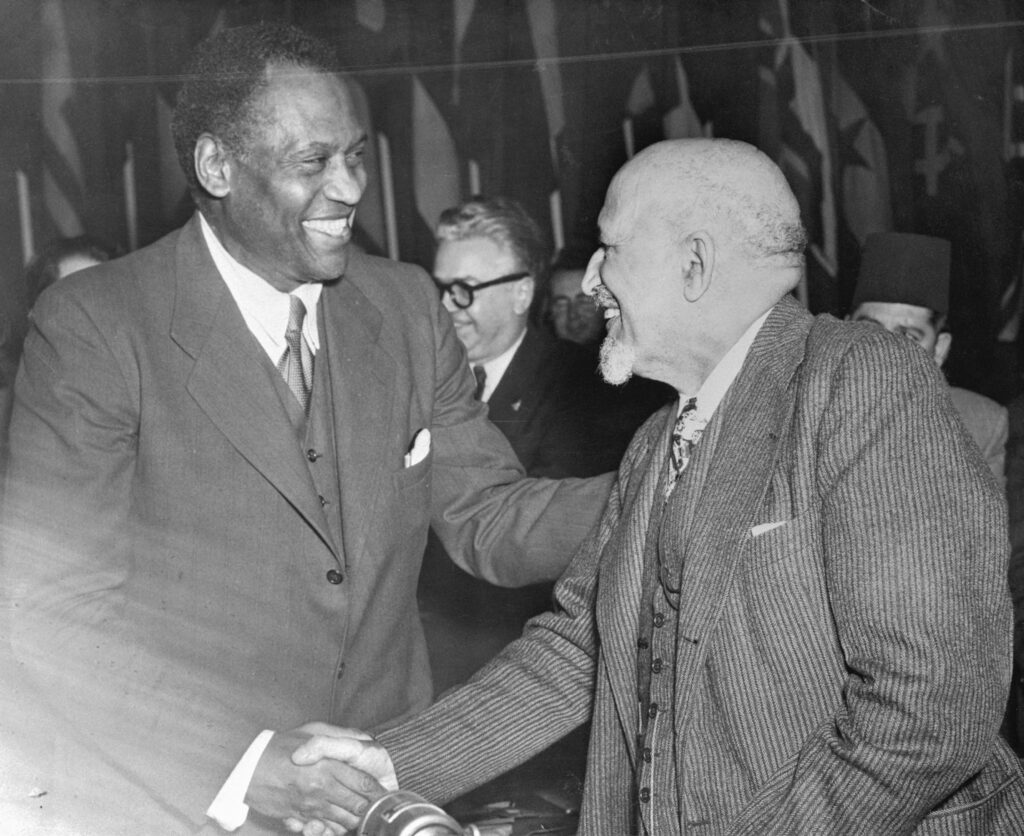
These fictional explorations resonate with themes Du Bois pursued more overtly in his later critical writings. In Color and Democracy: Colonies and Peace (1945) and The World and Africa, he mounted a trenchant critique of colonialism and its exploitative foundations. Du Bois argued that the wealth of Western powers was built upon the extraction of labor, resources, and sovereignty from colonized peoples. Read alongside Dark Princess and Worlds of Color, these texts show continuity in his vision: that racial domination, economic exploitation, and global empire were inseparable challenges — not afterthoughts in his career, but central to how he viewed the modern world.
Du Bois’s Global Legacy
Extensive scholarship — by Gerald Horne, Reiland Rabaka, Charisse Burden-Stelly, Nahum Dimitri Chandler, and Adom Getachew, among others8 — has illuminated W.E.B. Du Bois’s investment in internationalism and Pan-Africanism, particularly in his later years. The Global Du Bois traces these commitments across a longer arc of his life. From The Suppression of the African Slave Trade (1896) through his final writings on peace and decolonization, the project situates Du Bois’s global vision not as a late development but as a persistent thread in his thought.
Using digital methods, The Global Du Bois aims to transforms archival and bibliographic data into spatial and temporal visualizations that make the scope of Du Bois’s transnational networks and the evolution of his ideas visible. In doing so, it demonstrates how data can serve as a mode of interpretation — revealing structure, relation, and movement that are otherwise difficult to see. In the project, data functions as a tool for synthesis — uncovering Du Bois’s connections that stretch across time and geography while reframing his lifelong pursuit of African American freedom as inseparable from a global struggle for justice.
Bibliography
Burden-Stelly, Charisse. Black Scare/Red Scare: Theorizing Capitalist Racism in the United States. University of Chicago Press, 2023.
Chandler, Nahum Dimitri. “Beyond This Narrow Now”: Or, Delimitations of W.E.B. Du Bois. Duke University Press, 2021.
Du Bois, W. E. B. “The Color Line Belts the World.” Collier’s Weekly, October 20, 1906.
Du Bois, W. E. B. Dark Princess: A Romance. 1928. University Press of Mississippi, 1995; orig. pub 1928.
Du Bois, W. E. B. The Souls of Black Folk. Cosimo, 2007; orig. pub. 1903.
Gates, Henry Louis Jr. “Introduction.” In Darkwater: Voices from Within the Veil, by W.E.B. Du Bois, xv–xxx. Oxford University Press, 2007.
Getachew, Adom. Worldmaking after Empire: The Rise and Fall of Self-Determination. Princeton University Press, 2019.
Horne, Gerald. Black and Red: W.E.B. Du Bois and the Afro-American Response to the Cold War, 1944–1963. State University of New York Press, 1986.
Horne, Gerald. W.E.B. Du Bois: A Biography. Greenwood Press, 2009.
Rabaka, Reiland. W.E.B. Du Bois: A Critical Introduction. Polity, 2021.
Rampersad, Arnold. The Art and Imagination of W.E.B. Du Bois. Harvard University Press, 1990; orig. pub. 1976.
Wilkins, Roy, and Tom Mathews. Standing Fast: The Autobiography of Roy Wilkins. Viking Press, 1982.
Notes
- W. E. B. Du Bois, To the Nations of the World, ca. 1900, MS 312, The W. E. B. Du Bois Papers, Special Collections and University Archives, University of Massachusetts Amherst. ↩︎
- Roy Wilkins and Tom Mathews, Standing Fast: The Autobiography of Roy Wilkins (Viking Press, 1982), 293. ↩︎
- Gerald Horne, Black and Red: W.E.B. Du Bois and the Afro-American Response to the Cold War, 1944–1963 (State University of New York Press, 1986). ↩︎
- See Arnold Rampersad, The Art and Imagination of W.E.B. Du Bois (Harvard University Press, 1990; orig. pub. 1976); David Levering Lewis, W.E.B. Du Bois: Biography of a Race, 1868–1919 (Henry Holt, 1993) and W.E.B. Du Bois: The Fight for Equality and the American Century, 1919–1963 (Henry Holt, 2000); Henry Louis Gates Jr., “Introduction,” in Darkwater: Voices from Within the Veil, by W.E.B. Du Bois (Oxford University Press, 2007), xv. ↩︎
- W. E. B. Du Bois, The Souls of Black Folk (Cosimo, 2007; orig. pub. 1903), 9 ↩︎
- W. E. B. Du Bois, “The Color Line Belts the World.” Collier’s Weekly, October 20, 1906. ↩︎
- W.E.B. Du Bois, Dark Princess: A Romance (1928; University of Mississippi Press, 1995), 311. ↩︎
- See, for example, Gerald Horne, W.E.B. Du Bois: A Biography (Greenwood Press, 2009); Reiland Rabaka, W.E.B. Du Bois: A Critical Introduction (Polity, 2021); Charisse Burden-Stelly, Black Scare/Red Scare: Theorizing Capitalist Racism in the United States (University of Chicago Press, 2023); Nahum Dimitri Chandler, “Beyond This Narrow Now”: Or, Delimitations of W.E.B. Du Bois (Duke University Press, 2021); Adom Getachew, Worldmaking after Empire: The Rise and Fall of Self-Determination (Princeton University Press, 2019). ↩︎