
“The problem of the twentieth century is the problem of the color line —
the relation of the darker to the lighter races of men in Asia and Africa,
in America and the islands of the sea.”
— W.E.B Du Bois, The Souls of Black Folk, 19031
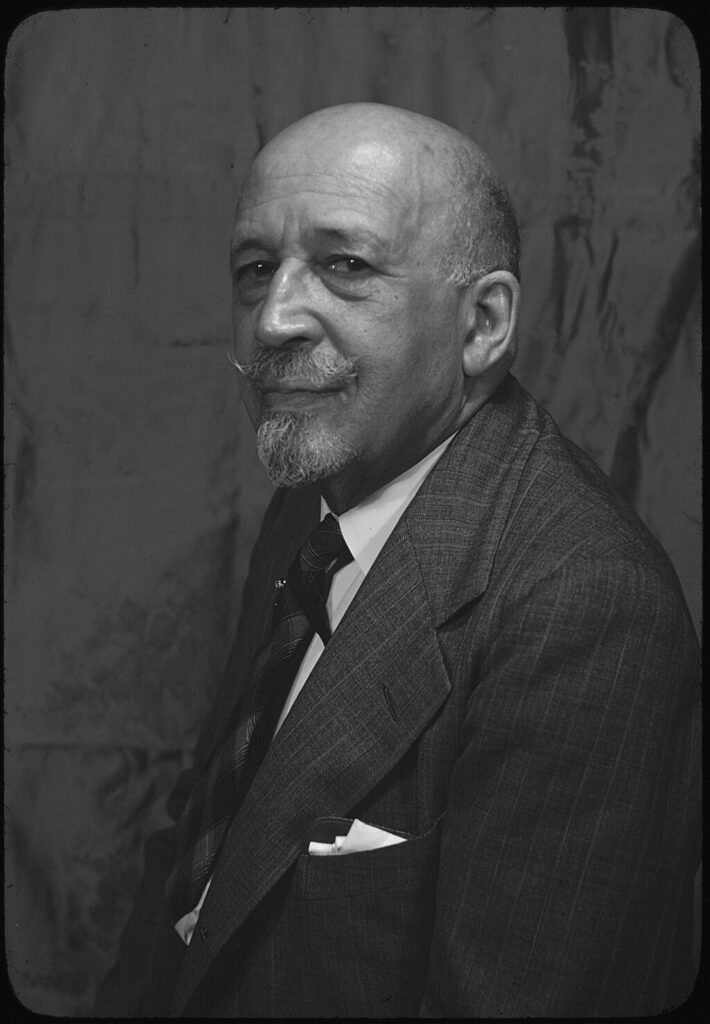
At its core, The Global Du Bois challenges prevailing biographical narratives that divide W.E.B. Du Bois’s life into separate phases — one focused on African American freedom struggles and another on anticolonial movements abroad. By visualizing his intellectual and political trajectories as continuous and entangled, The Global Du Bois reveals the global scope of his commitments from the very beginning of his career. His advocacy for Black liberation in the United States and his work for decolonization and peace were not departures from one another but expressions of the same world-making vision.
The project further develops a data-driven approach to biography grounded in the methodologies of digital humanities and Black studies. It combines the interpretive commitments of both fields: concern with how data structures and mediates knowledge from digital humanities and the insistence that race, diaspora, and lived experience are central to understanding systems of power from Black studies. Translating the theoretical insights of project director Roopika Risam’s New Digital Worlds: Postcolonial Digital Humanities in Theory, Praxis, and Pedagogy (Northwestern UP, 2019) into practice, The Global Du Bois treats data as an interpretive medium rather than a neutral instrument. While data inevitably abstracts, the project demonstrates that it can still be used to reveal relation and complexity. In this spirit, The Global Du Bois uses data to recover texture: the patterns of connection, movement, and intellectual exchange that shape a life scattered across archives and geographies.
This approach explores W. E. B. Du Bois’s life and thought through data, visualization, and digital methods, reimagining his archive and scholarship written about him as a dynamic dataset — an evolving record of where, when, and with whom he shaped ideas that transformed the 20th century. By treating Du Bois’s papers, publications, travels, and citations as data, The Global Du Bois uses computational analysis to ask interpretive questions: How do ideas circulate in diaspora? How does intellectual labor leave material traces? And how does the archive itself encode Black lives and knowledges?
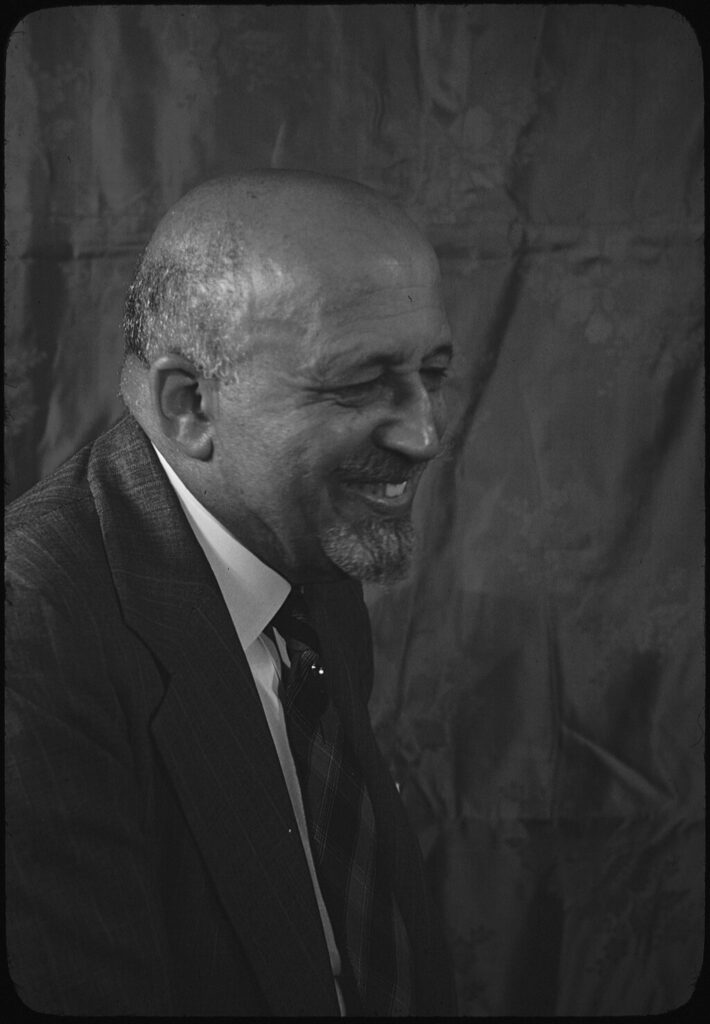
The first major data visualization, Du Bois GPS, maps more than 700 places where Du Bois lived, worked, lectured, or organized across the Americas, Africa, Europe, and Asia. Each location is linked to biographical, geographical, temporal, and bibliographic data, giving researchers, students, and Du Bois aficionados new ways to explore his movements and the contexts that shaped them. The map offers an open framework for studying how his life connected Black freedom struggles in the United States with anticolonial and internationalist movements around the world.
Building on this foundation, The Global Du Bois is developing additional components that invite users to explore his networks from multiple vantage points: correspondence, visualizing the global relationships and intellectual exchanges that sustained his work; citation and reception, tracing how Du Bois’s writings have circulated and been reinterpreted across disciplines and continents; and a multimedia edition of his 1928 novel Dark Princess, situating his vision of Afro-Asian solidarity within the political and literary currents of his time.
The Global Du Bois invites exploration rather than conclusion, building a living, extensible research infrastructure through which Du Bois’s intellectual, political, and creative worlds can be studied anew. The project approaches his archive as a field of relations. It is an experiment in method — an attempt to see through Du Bois, using data not to flatten but to illuminate the networks of movement and exchange that shaped his world, and to invite others to explore, question, and build on these connections.
Collaboration, sharing, and reuse are part of The Global Du Bois‘s methodological ethics as much as its technical design. Scholars, students, and community researchers are invited to share and reuse the data, propose new visualizations, and imagine further ways of tracing Du Bois’s global legacy.
Notes
- W. E. B. Du Bois, The Souls of Black Folk (1903; New York: Crest Books, 1961), 23. ↩︎